
Cyber Insurance: Is It Worth It for Your Business?
Cyberattacks are no longer limited to large enterprises. Ransomware, phishing, business email compromise and data breaches can disrupt operations, damage trust and create significant recovery costs for South African SMEs.
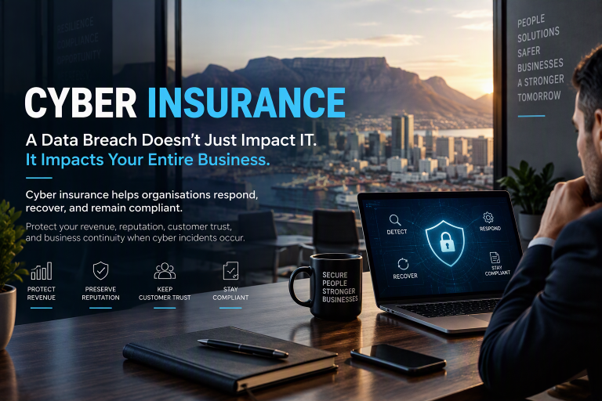
Cyber insurance can provide financial and specialist support after an incident, but it is a safety net—not a substitute for strong cybersecurity.
The POPIA Risk: Compliance is Not Optional
South Africa’s Protection of Personal Information Act (POPIA) places legal obligations on organisations to protect personal information and notify affected parties and the Information Regulator when a security compromise occurs. Businesses that suffer a data breach may face regulatory scrutiny, legal costs, reputational damage, customer loss, and significant recovery expenses.
According to South African cyber insurance and cyber risk providers:
- About one in three South African SMEs has experienced a cyberattack.
- Only about 26% of South African SMEs have cyber insurance.
- Phishing, ransomware, business email compromise (BEC), and data breaches remain leading causes of cyber losses in South Africa.
- Businesses that hold customer data, accept online payments, or depend on email and cloud services face greater POPIA exposure after a breach.
What Cyber Insurance Covers
Depending on the policy, cover may include:
- Incident response, forensic investigation and data recovery
- Business interruption and lost income
- Legal defence, privacy claims and regulatory support
- Customer notification, crisis communication and reputation management
Key Benefits
Financial protection. Cover can reduce the impact of recovery costs, legal fees, customer notification and lost revenue.
Expert response. Many policies provide access to forensic, legal, incident response and communication specialists when time matters most.
Business continuity and compliance support. Business interruption cover can support recovery from downtime, while privacy-related cover may assist with certain legal and breach-response costs under POPIA.
Key Limitations
Insurance does not prevent attacks. It only helps after an incident. MFA, endpoint protection, secure backups, patching and staff training remain essential.
Exclusions and conditions matter. Claims may be limited or rejected where required controls were absent, known vulnerabilities were ignored or policy conditions were not met.
Cost and limits require careful review. Premiums, deductibles, sub-limits and ransomware conditions vary. Coverage should be matched to realistic legal, recovery, downtime and customer-claim exposure.
Who Should Consider It?
Cyber insurance is especially relevant for organisations that:
- Store customer, employee, health or financial information
- Rely on cloud platforms, email or online payments
- Would lose significant revenue during downtime
- Have privileged access to client systems, as MSPs and technology providers do
- Need specialist assistance to manage a breach and POPIA obligations
Very small businesses with little data and limited online activity may need less extensive cover, but should still assess email, ransomware and third-party risks.
The Right Approach
The strongest strategy combines prevention and recovery: MFA, endpoint detection and response, email security, tested backups, vulnerability management, staff awareness and suitable cyber insurance.
Bottom Line
For South African SMEs, cyber insurance is worth considering when a serious incident could create unaffordable downtime, recovery, legal or customer-related costs. Review exclusions, required controls and policy limits carefully, and treat insurance as the final layer of a broader cybersecurity strategy.